Van Rental: Is It Worth Paying Extra for Unlimited Miles?
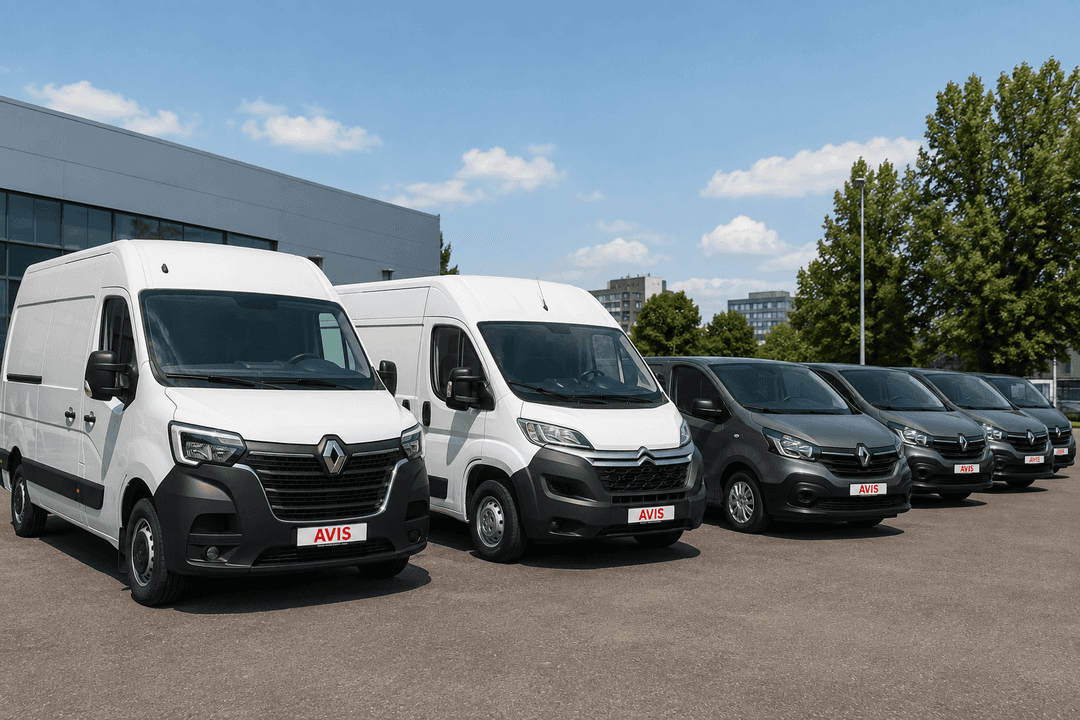
When renting a van, it’s often not enough to just compare the daily rate. The total rental cost can also be significantly affected by the number of kilometers you
you drive during the rental period. This raises the question of whether it’s worth paying extra for unlimited kilometers when renting a van, or if it’s more cost-effective to stick with a standard daily limit, such as 200 to 300 km.
The decision depends mainly on the planned route, the length of the rental, how the van will be used, and the cost per kilometer over the set limit. A customer who needs a van for moving within the city views the mileage limit differently than a company that drives several hundred kilometers a day with the vehicle.
In this article, we’ll show you how to easily calculate which option is more advantageous for you. We’ll also look at situations where unlimited kilometers are worth it, when they’re an unnecessary extra charge, and what to consider before signing the rental agreement.
What Does a Kilometer Limit Mean in Practice When Renting a Van?
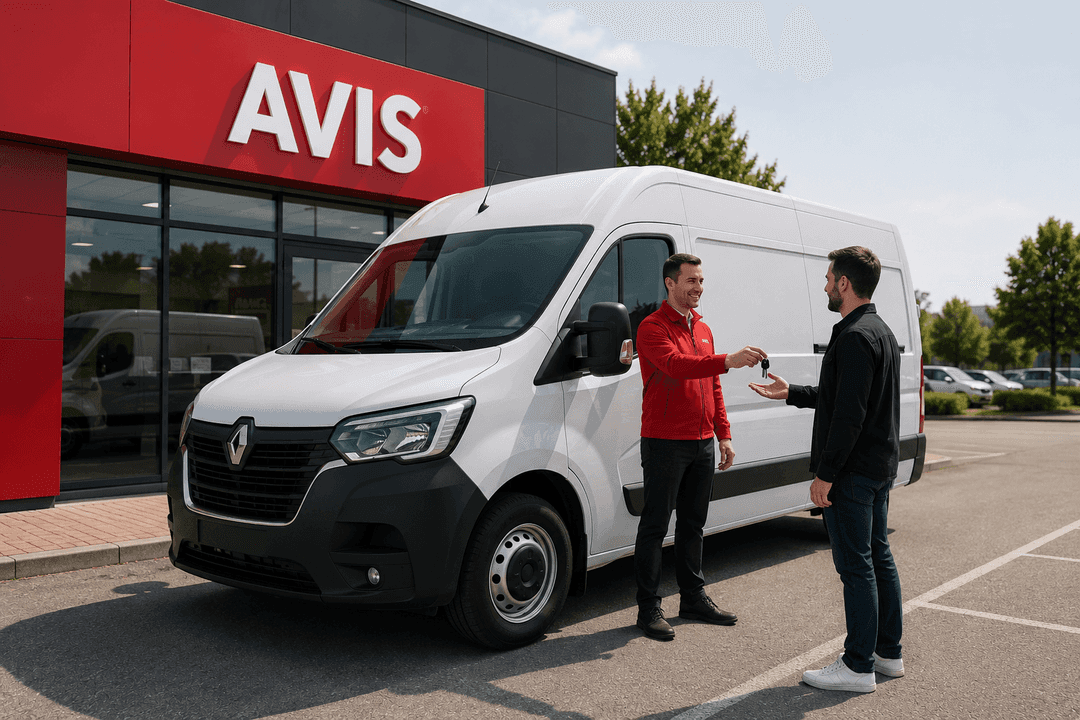
When renting a van, the number of kilometers included in the rental price may be limited. A typical example is a daily limit of 200 or 300 km.
If the customer drives more than that during the rental period, the kilometers exceeding the set limit may be charged separately according to the rental price list.
This isn’t just a detail to check when making a reservation. The mileage limit can have a significant impact on the total rental price, especially for longer trips.
The daily limit is not the same as the total number of kilometers for the entire rental
For example, if you rent a van for three days with a daily limit of 300 km, you theoretically have 900 km available. However, specific terms may vary between car rental companies, so it’s important to verify how kilometers are calculated directly in the rental terms.
When planning, it’s not enough to know just the daily rate. You also need to know:
- how many kilometers are included in the price,
- whether the limit is calculated per day or for the entire rental period,
- what the price per kilometer is for mileage over the limit,
- whether there is an option for unlimited mileage,
- and what other conditions apply to the specific type of rental.
Van Rental with or without a Mileage Limit: Which Is Better?
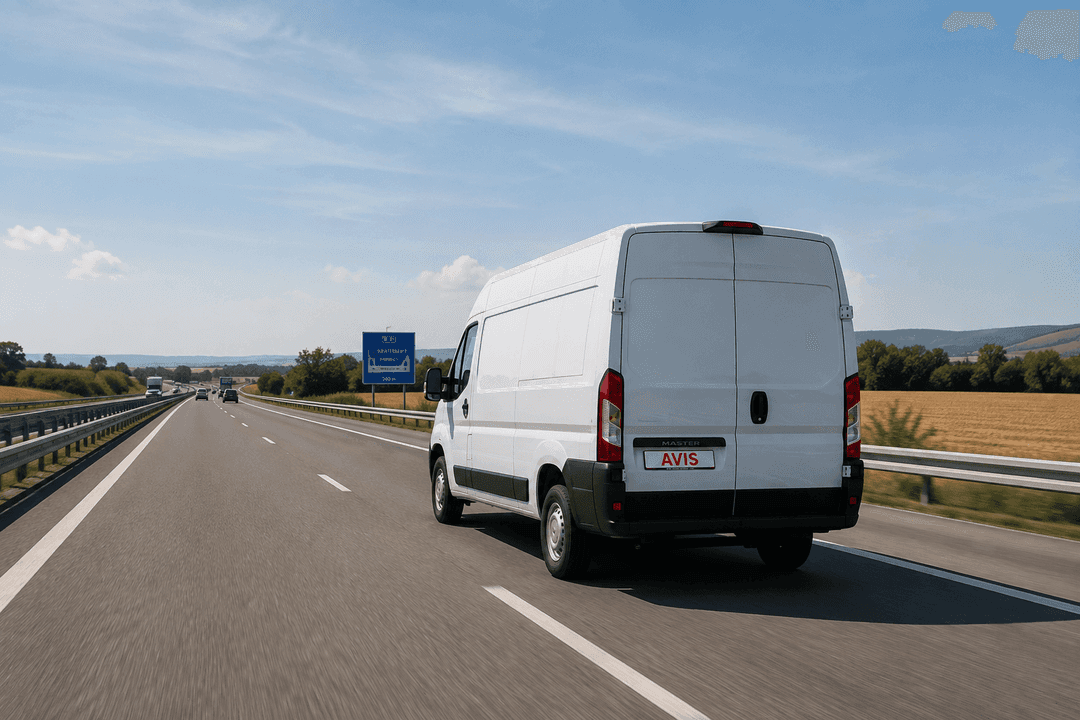
There is no single right answer for every customer. The key factor is, above all, the estimated number of kilometers.
If you know you’ll drive significantly less than the set limit during your rental, unlimited mileage may not result in any real savings. On the other hand, for long trips, the surcharge for unlimited mileage can be a very sensible investment.
When a Standard Daily Limit Is Sufficient
A limit of 200 to 300 km per day may be suitable, for example, when:
- you’re moving within a single city or region,
- you’re transporting furniture between nearby locations,
- you need a van for a one-time move,
- you’re planning only a few short trips,
- you know your route and can estimate the number of kilometers,
- or want to minimize the base rental price.
In that case, it may be unnecessary to pay for a service you won’t use.
When does unlimited mileage make sense?
Unlimited mileage can be particularly appealing for:
- long-distance trips,
- transporting goods between multiple cities,
- business trips,
- moving between distant regions,
- multi-day rentals with an uncertain itinerary,
- or in situations where you need to flexibly change your route during the rental.
The benefit isn’t just the potential savings. It’s also reassuring to know that you won’t face an additional charge for kilometers over the limit when you return the vehicle.
How to Calculate Whether Unlimited Kilometers Are Worth It
The easiest way is to compare the two options before making a reservation. You’ll need to know three basic pieces of information: the planned number of kilometers, the number of kilometers included in the price, and the price per kilometer over the limit.
Let’s consider a two-day rental with a daily limit of 250 km. The total included limit is therefore 500 km. If you plan to drive approximately 800 km, you’ll exceed the limit by 300 km.
If the fee per kilometer over the limit were, for example, €0.30, the additional cost would be €90.
In this case, simply compare that €90 with the surcharge for unlimited mileage. If the surcharge for unlimited mileage is lower than the expected cost for the extra kilometers, the unlimited option makes more financial sense.
A Simple Calculation
Expected kilometers – included kilometers = kilometers over the limit
Then:
Miles over the limit × price per mile = potential surcharge
When making your decision, always use the specific prices and terms of the offer in question. Price lists may vary depending on the vehicle type, rental duration, and specific rate plan.
Watch out for a common problem: underestimating the distance
When planning a van rental, customers often calculate only the distance between the pickup location and the destination. However, the actual number of kilometers may be higher.
The total mileage may also include:
- the trip to the loading location,
- trips between multiple addresses,
- the return trip,
- stops along the way,
- the trip to a gas station or parking lot,
- trips due to unexpected schedule changes.
For longer trips, it may therefore be wise to allow for some extra time.
A Practical 10-Minute Checklist Before Booking
Before choosing a rate plan, answer these questions:
- Approximately how many kilometers will I drive?
- How many kilometers are included in the price?
- How much does each kilometer over the limit cost?
- Can my route change during the rental period?
- Do I need to travel between multiple addresses during the rental period?
- Is the price difference between the limited-mileage and unlimited-mileage options significant enough?
If you answer “yes” to the last two questions, unlimited kilometers may be a more practical option.
When it comes to corporate van rentals, it’s not just about the price
For companies, deciding on a mileage limit is even more important. A van may be part of daily operations, and the number of kilometers driven isn’t always precisely predictable.
If the vehicle is used by salespeople, service technicians, installation teams, or logistics staff, a few dozen extra kilometers per day can add up to hundreds or thousands of kilometers over the course of a month.
In a B2B environment, therefore, it is important to monitor not only the nominal lease price but also the total cost of vehicle use.
Cost predictability has its value
For a company, it may be more advantageous to choose a rate where the rental price is slightly higher but the costs are more predictable.
This is especially important when:
- the vehicle is used by multiple employees,
- routes vary depending on orders,
- the number of trips varies from week to week,
- or the company needs the van for several days or weeks.
For corporate rentals, we therefore recommend looking at the total cost of the rental, not just the price per day.
When renting a van, the length of the rental period is also a key factor
The longer you use the van, the more important the mileage limit may become.
For a one-day rental, 200 to 300 km may be perfectly sufficient. For a one-week rental, however, even a relatively low daily mileage gradually adds up.
For example, for a seven-day rental with a daily limit of 250 km, the total limit is 1,750 km if the limit is calculated for each day. If you’re planning a trip of 2,500 or 3,000 km, it’s a good idea to calculate the difference between the limited and unlimited rates in advance.
A longer rental also brings greater uncertainty. A plan that initially seems to be 2,000 km may change over the course of the week depending on the situation.
How to Choose the Right Rate When Renting a Van
You can use a simple three-step process to make your decision.
1. Estimate a realistic mileage
Don’t just calculate the ideal route. Include the return trip, transfers, and a buffer for unplanned trips.
2. Calculate the cost of exceeding the mileage limit
Find out how much you’d pay for the extra kilometers. Compare this figure to the surcharge for unlimited mileage.
3. Consider the value of flexibility
If the price difference is small, unlimited mileage may still be worth it even if you’re unlikely to use it to the fullest. You’re essentially buying yourself more freedom in planning.
When choosing a van at AVIS, it’s therefore worth looking not only at the daily rate itself, but also at the full rental terms, including the mileage limit and other fees.
When is it worth paying extra for unlimited mileage?
Unlimited mileage isn’t automatically a better deal. However, it’s also not true that the cheapest daily rate means the lowest final price.
Your estimated mileage is the deciding factor.
If you’re planning short local trips and can comfortably stay within the limit, the standard rate may be the more economical choice. If you’re planning a long trip, multiple stops, or a journey lasting several days, unlimited mileage can offer not only a financial advantage but also greater peace of mind.
The best choice is therefore the one that matches how you’ll actually use the van.
Conclusion: Don't Choose Based Solely on the Daily Rate
When renting a van, it’s worth looking at the total price, not just the base rate. The mileage limit can significantly affect the final bill, especially for longer trips and multi-day rentals.
If you know exactly how many kilometers you’ll drive, a simple calculation will show you which option is more cost-effective. However, if your plans are flexible and you expect to drive a lot of kilometers, unlimited mileage can be a practical way to ensure greater freedom and better control over your costs.
Before booking a van, always check not only the daily rate but also the included mileage limit and the terms for billing additional kilometers. With AVIS’s offerings, you can choose the solution that best matches how you’ll actually use the vehicle.
FAQ: Van Rental and Mileage Limit
Is an unlimited mileage plan worth it when renting a van?
It depends on your planned mileage. For long trips, unlimited mileage may be more cost-effective; for short local trips, the standard limit may be sufficient.
How many kilometers are typically included in a van rental?
The limit depends on the specific offer, the type of rental, and the car rental company’s terms and conditions. It’s often set as a daily limit, such as 200 to 300 km.
What happens if I exceed the mileage limit?
Kilometers exceeding the set limit may be charged according to the current price list. It is therefore advisable to check the specific terms and the price per kilometer before renting.
How do I calculate how many kilometers I’ll drive during the rental?
Add up your planned routes, including the return trip, travel between locations, and a buffer for unplanned trips. For longer trips, it’s best to allow for some extra mileage.
Is unlimited mileage better for a corporate rental?
Not always. It depends on how the vehicle is used. For regular and long trips, unlimited mileage can be an attractive option because it simplifies planning and makes costs more predictable.
