WHAT IS THE BEST SHIPPING OPTION FOR TRANSPORTING OVERSIZED FURNITURE, A TALL SOFA, OR A UPRIGHT REFRIGERATOR?
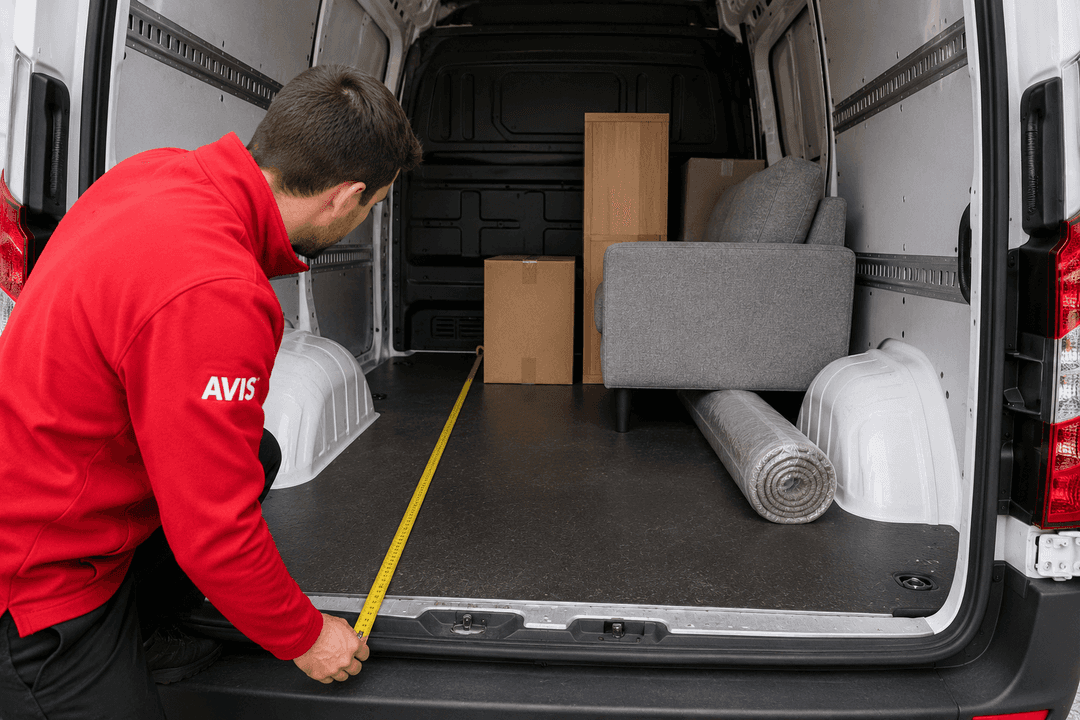
When transporting large pieces of furniture, it’s not enough to choose a van based solely on its cubic meter capacity. When transporting a sofa, a tall cabinet, a mattress, a refrigerator, or other bulky cargo, the key factors are the interior dimensions of the cargo area, the height and width of the rear doors, the length of the floor, the ability to secure the load safely, and the height of the loading edge. Choosing the wrong vehicle can result in the cargo not fitting into the van or not being able to be secured safely.
If you’re looking for a van to transport furniture, it’s therefore best to start with the specific dimensions of the cargo and then select the vehicle category. Otherwise, a large van may be unnecessarily oversized, or, conversely, a smaller van may not have sufficient cargo length or height.
In this article, we’ll show you how to choose the right commercial vehicle, how to transport a tall sofa or a refrigerator in an upright position, and what details to consider before booking a van.
THE TRUCK USED TO TRANSPORT FURNITURE MUST BE THE RIGHT SIZE
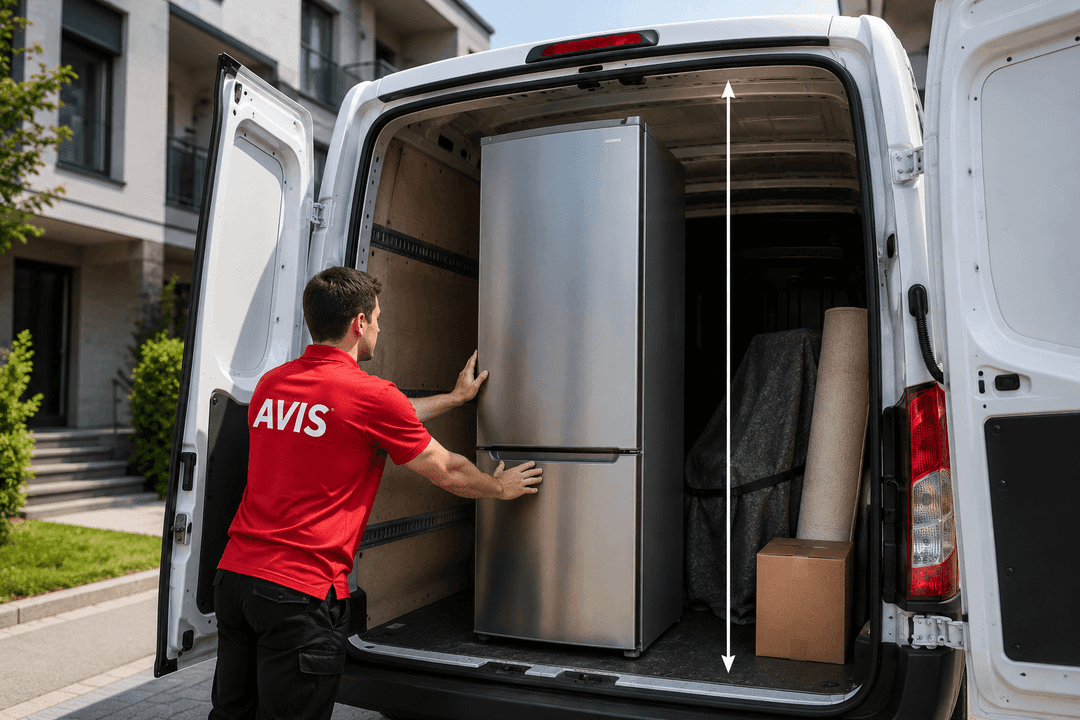
When choosing a vehicle, the most important thing is to compare the dimensions of the load with the actual dimensions of the cargo area. Volume in m³ is a useful guideline, but it may not be the deciding factor for large pieces of furniture.
For example, a sofa may have a small enough volume, but its length or height could be a problem. Similarly, a refrigerator may easily fit within the van’s volume capacity, but its height may limit its transport when placed upright.
Before booking, be sure to measure:
- the length of the longest side of the load,
- the width of the cargo,
- the height of the cargo,
- the dimensions of any packaging,
- the weight of each item,
- the dimensions of the door through which you will be loading the cargo.
It is important to account for the dimensions of the cargo as you will actually be transporting it. For example, if you plan to transport a refrigerator upright, the usable interior height and the ability to secure it safely will be particularly important.
WHY IT’S NOT ENOUGH TO JUST LOOK AT THE CARGO AREA VOLUME
The cargo space volume may seem convincing, but two loads with the same volume can be arranged completely differently in the same van.
When it comes to furniture, therefore, a simple rule applies: first consider the largest dimension of a specific item, and only then the total volume.
WHAT KIND OF TRUCK IS BEST FOR TRANSPORTING LARGE FURNITURE?
Not every load requires the same size vehicle. When making your selection, it’s helpful to categorize the load based on its shape, dimensions, and handling requirements. Smaller pieces of furniture, boxes, small appliances, or disassembled cabinets may be suitable for a compact van. For a larger sofa, bed, wardrobe, or a combination of several pieces, a medium or large box van may be a better option.
LARGE SOFA OR SECTIONAL
When transporting a sofa, pay particular attention to its overall length and height. If it can be disassembled into separate parts, this will significantly simplify loading.
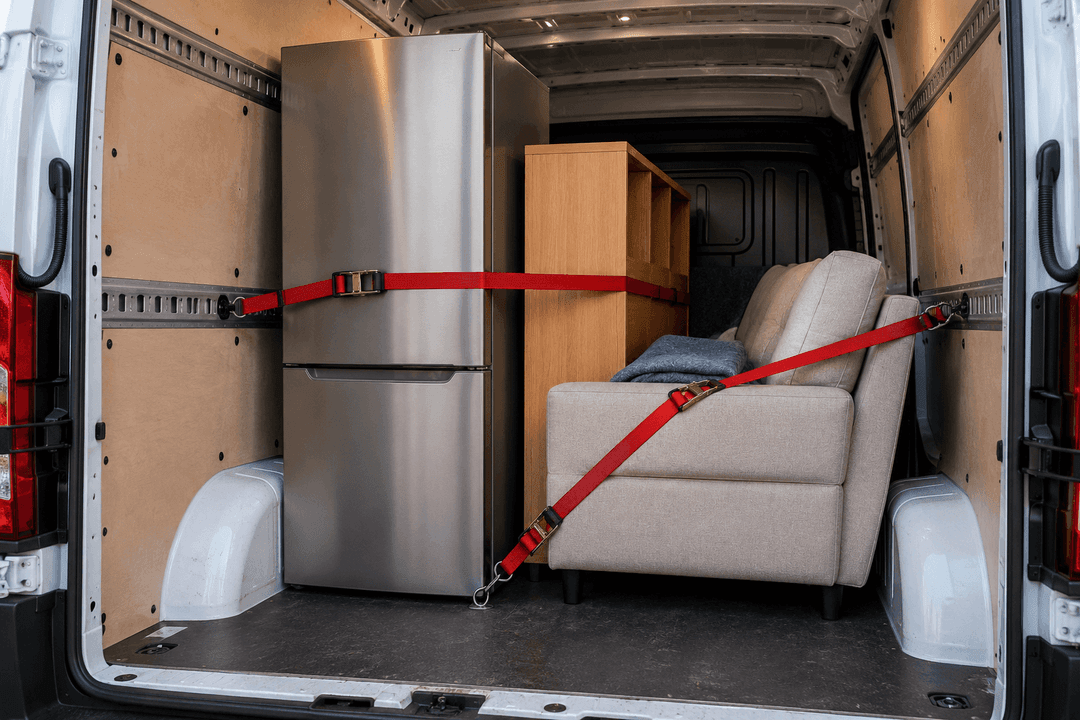
With a tall sofa, it’s also important to check whether it can be laid on its side. However, this doesn’t mean you can leave it lying loose while driving. The cargo must be stable and secured against shifting.
UPRIGHT REFRIGERATOR
The situation is unique when it comes to refrigerators. If you need to transport one in an upright position, you must choose a vehicle with sufficient interior height.
In addition to the height of the refrigerator, check the height of the rear opening as well. It’s possible that the interior space is tall enough, but you won’t be able to get the load through the door in the desired position.
Before loading, remove any loose shelves and drawers, secure the doors so they cannot open, and fasten the appliance so that it cannot tip over or shift while driving.
WARDROBE, BED, OR MATTRESS
It is advantageous if wardrobes and beds can be disassembled. Disassembly can reduce the length and height requirements for the cargo area and also make handling easier.
A mattress is bulky but relatively light. When transporting it, it is therefore more important to secure it against shifting and to prevent damage during loading.
THE LENGTH OF THE LOADING AREA MATTERS MORE THAN IT SEEMS
When transporting furniture, the length of the cargo area is one of the most important factors. If you want to transport a long table, a cabinet, a countertop, or a piece of furniture several meters long, a short van can be a problem even if it has sufficient cargo capacity.
So when making your choice, ask yourself three questions:
- Will the longest item fit on the floor?
- Can the load be arranged so that it doesn’t block the doors?
- Will there be enough space to secure the load safely?
Don’t forget about any protrusions in the cargo area, wheel wells, or crossbars. These can reduce the actual usable space.
If you’re unsure whether a specific piece of furniture will fit in the van category you’ve selected, it’s best to check the vehicle’s dimensions before making a reservation.
TIE-DOWN STRAPS ARE ESSENTIAL FOR LARGE PIECES OF FURNITURE
Simply loading furniture into a van isn’t enough. While driving, even a relatively light object can exert significant force if the vehicle brakes suddenly or changes direction.
Therefore, secure large furniture to prevent it from moving. Ideally, use the designated anchor points and appropriate tie-down straps.
When securing the load, make sure that:
- the load cannot slide forward,
- it cannot shift sideways,
- individual pieces do not damage each other,
- the straps do not damage the delicate surface of the furniture,
- the securing does not block the doors or access to the load.
Depending on the type of cargo, you can use protective pads, blankets, or other suitable materials between the cargo and the walls or floor. Protection is especially important for furniture with lacquered, glass, or delicate surfaces.
THE LOADING EDGE CAN DETERMINE WHETHER YOU CAN LOAD THE CARGO
When it comes to heavy appliances and furniture, the height of the loading edge is also important. The higher an item has to be lifted, the more difficult it can be to handle.
For a refrigerator, washing machine, wardrobe, or heavy furniture, you’ll appreciate a low and easily accessible loading edge. The width and height of the rear door are also important.
Plan the entire process before you leave:
- Measure the load.
- Check the dimensions of the cargo area.
- Verify the dimensions of the rear opening.
- Arrange for help with loading.
- Prepare tie-down straps and protective material.
- Distribute the load so that the weight is distributed as evenly as possible.
- Check all fastenings before driving.
When handling heavy items, it’s not advisable to rely solely on the physical strength of one person. Having a second person help can significantly reduce the risk of damaging furniture or getting injured during handling.
HOW TO CHOOSE THE RIGHT VAN SIZE FOR A SINGLE MOVE
When moving or transporting furniture just once, it’s tempting to choose the largest van possible. However, a larger vehicle isn’t necessarily the best choice.
It’s more practical to base your choice on the load. If you’re transporting just one sofa and a few boxes, you don’t need the same capacity as you would for a full apartment move.
Conversely, when transporting a combination of a large wardrobe, a sofa, a bed, appliances, and dozens of boxes, a larger van may be more efficient. A single larger trip can be cheaper and save time compared to multiple trips in a smaller vehicle.
This principle is even more important for commercial transport. Choosing the right vehicle capacity can help reduce the number of trips, downtime, and handling costs.
AVIS VAN: CHOOSE A VAN BASED ON YOUR SPECIFIC CARGO
For one-time transport of furniture, appliances, or business equipment, it may not make economic sense to own a large commercial vehicle year-round. A practical alternative is to rent a van for the period when you actually need it.
AVIS Van offers various categories of commercial vehicles, so you can take into account the type of cargo, the space required, and the planned rental duration when making your selection.
However, the most important factor remains choosing a vehicle based on the specific item you need to transport. When transporting a large sofa, an upright refrigerator, or oversized furniture, a single specific dimension—one that standard cargo space volume figures don’t reveal—can be the deciding factor.
So if you’re planning to transport larger cargo, make sure to measure its dimensions before booking. Choosing the right van will save you unnecessary loading, extra trips, and stress during the move itself.
CONCLUSION: THE RIGHT TRUCK STARTS WITH THE DIMENSIONS OF THE CARGO
The most suitable vehicle for transporting furniture isn’t necessarily the largest one. The specific dimensions of the load, the length of the cargo area, the height and width of the rear opening, the loading edge, and the options for secure anchoring are all decisive factors.
When transporting a tall sofa or a refrigerator in an upright position, special attention must be paid to height. For long pieces of furniture, the usable floor length is the deciding factor. And for any large load, secure fastening is just as important as the vehicle’s capacity itself.
If you measure your cargo before booking and compare its dimensions with the specifications of the selected van, you’ll be much more confident that the transport will go smoothly without unnecessary complications. When choosing an AVIS Van, it’s therefore worth basing your decision on what you specifically need to transport, rather than just the size of the vehicle.
FAQ: FREQUENTLY ASKED QUESTIONS ABOUT TRANSPORTING LARGE FURNITURE
WHAT KIND OF VAN IS BEST FOR TRANSPORTING FURNITURE?
The best van is one that has a cargo area with sufficient length, width, and height for the specific load. When choosing a van, it’s more important to know the dimensions of the furniture than to focus solely on the van’s volume.
CAN A REFRIGERATOR BE TRANSPORTED UPRIGHT IN A VAN?
Yes, if the vehicle’s dimensions allow it and the refrigerator can be safely loaded and secured. Before booking, be sure to check its height, the height of the rear opening, and the securing options.
HOW DO YOU SECURE A SOFA IN A VAN?
The sofa should be placed securely and fastened to prevent it from shifting. It’s best to use the designated anchor points and straps, while protecting sensitive parts of the furniture from damage.
WHAT IS MORE IMPORTANT WHEN TRANSPORTING FURNITURE—VOLUME OR THE LENGTH OF THE LOADING AREA?
For large pieces of furniture, the length, width, or height may be more critical than the total volume. The cargo must have enough space not only for storage but also for secure fastening.
IS IT WORTH RENTING A LARGER VAN?
If you need to transport multiple large items at once, a larger van can reduce the number of trips and simplify logistics. However, it doesn’t make sense to pay for excess space if you’re only transporting a single smaller piece of furniture.
