What kinds of vans can I drive with a Class B driver's license for vehicles up to 3.5 metric tons?
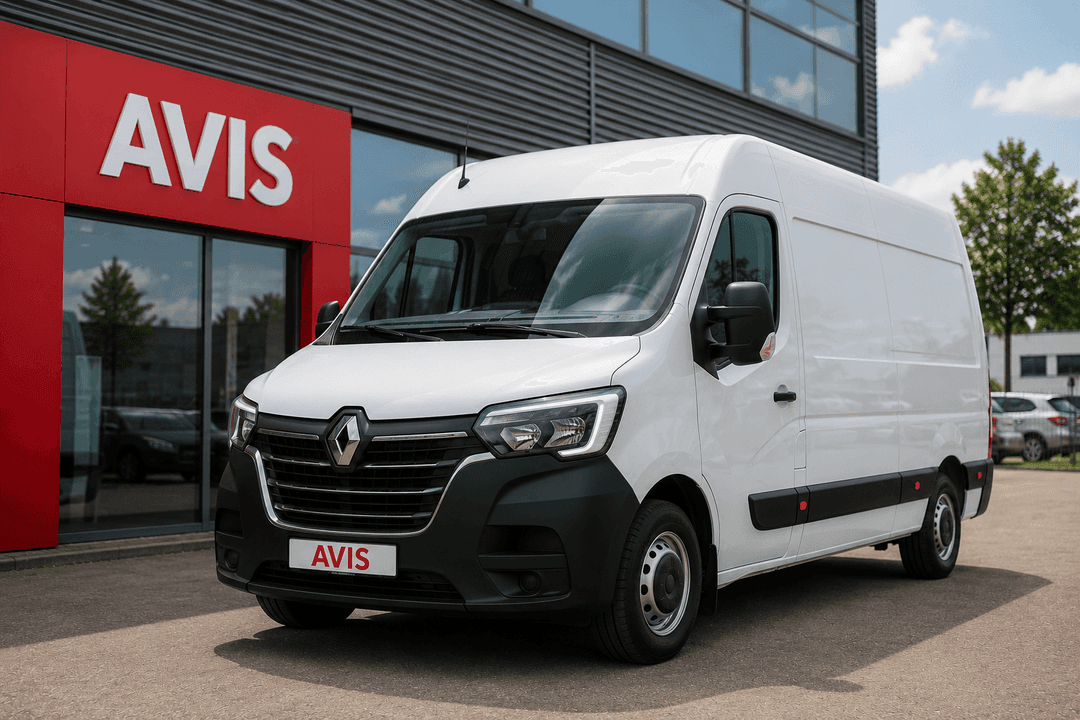
If you’re planning to rent a van for moving, transporting materials, or a business trip, one of the first questions is whether you need a special driver’s license to drive it. In most cases, a Class B driver’s license will suffice. However, the decisive factor is not the size of the van or the volume of its cargo area, but rather its maximum allowable gross weight.
For Category B vehicles, the basic limit is 3,500 kg. This means that with a standard Category B driver’s license, you can drive motor vehicles whose maximum permissible gross weight does not exceed 3,500 kg. This category may also include a large van that, at first glance, appears to be a vehicle intended for professional freight transport.
However, the 3.5-metric-ton limit alone does not indicate how much cargo you can load. This is where the most common mistake occurs. When renting a van, it’s important to distinguish between the gross vehicle weight rating, the operating weight, and the vehicle’s actual payload capacity.
What can you drive with a Class B driver's license?

Category B includes motor vehicles with a maximum authorized total weight not exceeding 3,500 kg and designed to carry up to eight passengers in addition to the driver. A Group B vehicle may also be towed by a trailer with a maximum permissible gross weight of up to 750 kg.
For the average driver, this means that a Class B driver’s license covers much more than just passenger cars.
What types of commercial vehicles fall into this category?
Provided the weight requirements are met, with a Class B license you can drive, for example:
- small city vans,
- compact commercial vehicles,
- medium-sized vans,
- large box vans up to 3.5 metric tons,
- certain passenger versions of commercial vehicles,
- selected electric or other alternatively powered commercial vehicles under specific conditions.
Therefore, the model designation itself is not the determining factor. The same van model may exist in multiple weight configurations, and a specific version may have a different maximum allowable gross vehicle weight.
Vehicles up to 3.5 metric tons: What does the 3,500-kilogram limit actually mean?
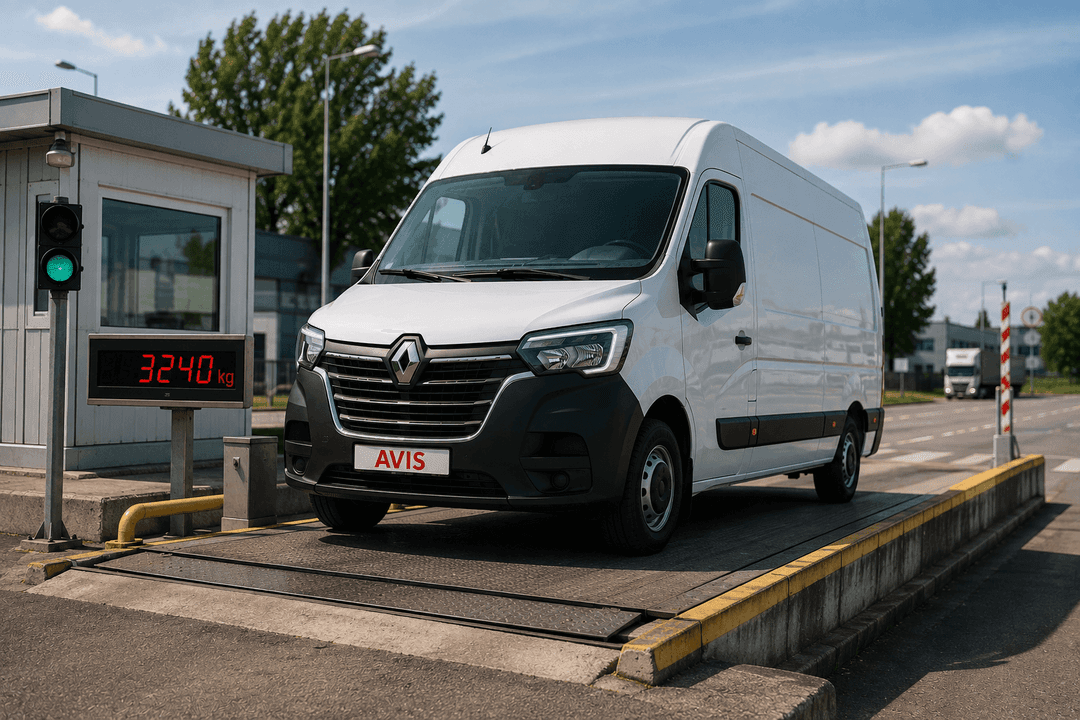
The 3,500 kg limit refers to the maximum allowable gross vehicle weight. It is not, therefore, the maximum weight of the cargo itself.
The total weight includes the weight of the vehicle and everything inside it while it is in motion. That’s why it’s not enough to say, “The van has a 3.5-metric-ton capacity, so I can load 3.5 metric tons.”
Such reasoning would be incorrect.
You’ll find the relevant information in the vehicle’s documentation
When checking the weight, it’s worth looking at the vehicle registration certificate. Among other things, it contains information on the operating weight and the maximum permissible gross vehicle weight. In the current format of the documents, these figures are labeled, for example, as G and F.1/F.3.
The difference between these values will give you a basic idea of how much weight you can still add to the vehicle.
Van Payload Capacity: How Much Cargo Can You Actually Load?
When renting a van, the load capacity is at least as important as the size of the cargo area. A large van may have enough space for plenty of boxes, furniture, or building materials, but its weight capacity may be much lower.
The basic calculation is simple:
maximum allowable gross weight – operating weight = approximate available weight
In a real-world scenario, however, you must also take into account the people in the vehicle, fuel, work equipment, and other gear.
Practical example
Imagine a van with a maximum allowable gross weight of 3,500 kg and an operating weight of 2,300 kg.
The difference is 1,200 kg.
However, this does not automatically mean that you can load exactly 1,200 kg of cargo. If the vehicle carries a driver, a passenger, tools, or other equipment, their weight must be included in the total load.
During a roadside technical inspection, the maximum cargo weight is determined based on the relevant vehicle specifications; the regulation also specifies how to determine the weight if the vehicle was not weighed prior to loading.
A large van doesn't automatically mean a high load capacity
When choosing a van, customers often look at its dimensions. If they need to transport large furniture, appliances, or a large number of boxes, they naturally reach for the largest vehicle.
When it comes to weight, however, the logic is a little different.
Cargo space and load capacity are two different characteristics. A van may have a large cargo space, but if the load is heavy, you may hit the weight limit before you fill the entire space.
Volume vs. Weight
When planning your shipment, therefore, ask yourself two separate questions:
- Will the cargo fit in the cargo area?
- Will the vehicle remain below the weight limit after loading?
When moving household goods, volume is often the issue. With construction materials, tiles, tools, or other bulky goods, weight can be the problem instead.
For example, if you’re loading several hundred kilograms of material, a large cargo area won’t help you if you’re already approaching the maximum allowable weight.
What should you keep in mind when loading a van?
When loading a van, it’s not enough to just estimate whether everything will fit. Proper load distribution is also important.
Improperly loaded or excessively heavy cargo can affect the vehicle’s stability, braking, and handling.
Before leaving, be sure to check, in particular,
- the approximate weight of the cargo,
- the number and weight of passengers,
- work equipment and tools,
- whether you are exceeding the weight limit,
- whether the cargo is evenly distributed,
- whether the cargo is sufficiently secured against movement,
- whether you are exceeding the permitted load on individual axles.
Information on the maximum permissible weight per axle is also included in the vehicle’s records.
How do you choose the right van for moving or transporting goods?
The right choice of van should be based on the type of cargo, not just on which van is the largest.
For a typical household move, a larger van may be suitable because it offers enough space for furniture and boxes. However, when transporting heavy items, load capacity may be more important than volume alone.
A Simple Guide Based on the Type of Cargo
Boxes, clothing, and smaller items:
The priority is usually cargo space and ease of handling.
Furniture and appliances:
The combination of cargo area length, height, and available load capacity is important.
Building materials:
The priority is the weight of the cargo and its proper distribution.
Business equipment and tools:
In addition to load capacity, you should also consider the frequency of trips and the practical layout of the cargo area.
When renting a van, the largest model is therefore not always the best choice. The right vehicle is one that provides sufficient space and load capacity without unnecessary excess at the expense of efficiency.
What if the van weighs more than 3.5 metric tons?
A vehicle with a maximum authorized gross weight exceeding 3,500 kg is no longer considered a standard Group B vehicle. For motor vehicles over 3,500 kg, the law specifies, for example, Class C1, which covers vehicles with a maximum authorized gross weight of more than 3,500 kg up to 7,500 kg.
However, there are also specific exceptions.
Alternative propulsion systems represent a special case
Current Slovak legislation allows holders of a Class B driver’s license, two years after its issuance, to drive certain vehicles intended for the transport of goods with alternative propulsion systems within the territory of the Slovak Republic, provided they have a maximum authorized gross weight exceeding 3,500 kg but not exceeding 4,250 kg.
However, this option applies only under precisely defined conditions. The increased weight must be due to the higher weight of the propulsion system and must not result in an increase in payload capacity compared to a comparable vehicle with an internal combustion engine.
For standard van rentals, therefore, a simple rule applies: if you want to be sure that a standard Class B driver’s license is sufficient, choose a vehicle with a maximum allowable gross weight of up to 3,500 kg and always check the specific vehicle configuration.
Renting a Van with a Class B Driver's License: A Practical Checklist Before Renting
Before booking a van, you can go through this short checklist:
- Do I have a Class B driver’s license?
- What is the maximum allowable gross vehicle weight of the selected vehicle?
- Does it exceed 3,500 kg?
- What is the vehicle’s operating weight?
- What is its actual available payload capacity?
- How much will the cargo weigh?
- How many people will be in the vehicle?
- Will I be transporting heavy or bulky materials?
- Is the load properly distributed and secured?
- Will I exceed the permitted axle load?
If you’re unsure how much space or load capacity you need, it’s best to choose a vehicle based on the specific purpose of your trip. When renting a van from AVIS, you can select a vehicle based on its type and intended use, and verify the specific specifications of your chosen model before making a reservation.
Conclusion: When it comes to delivery, there’s more to it than just size
With a standard Class B driver’s license, you can drive a wide range of vans and commercial vehicles. The basic limit is a maximum allowable gross vehicle weight of 3,500 kg, but when choosing a vehicle, you shouldn’t stop at just this number.
Equally important are the load capacity, the weight of the cargo, and its distribution within the vehicle. A large van isn’t necessarily the best solution, and a spacious cargo area doesn’t mean you can fill it with cargo of any weight.
If you check the vehicle’s weight specifications before renting and realistically estimate your load, you’ll avoid unnecessary problems and choose a van that’s right for your transport needs.
FAQ: Vans and a Class B Driver's License
Can I drive a van weighing up to 3.5 metric tons with a Class B driver’s license?
Yes. A Class B driver’s license authorizes you to drive Class B vehicles with a maximum authorized gross weight of up to and including 3,500 kg.
Can I drive a Renault Master or Citroën Jumper with a Class B driver’s license?
You can, provided that the specific version of the vehicle meets the requirements for Class B, particularly if its maximum authorized gross weight does not exceed 3,500 kg. Therefore, you should check the technical specifications of the specific vehicle.
How many kilograms can I load into a van weighing up to 3.5 metric tons?
There is no one-size-fits-all answer. It depends on the operating weight of the specific van and any additional load on the vehicle. The calculation must also include the driver, passengers, and equipment.
Which is more important—the van’s volume or its load capacity?
It depends on the cargo. For boxes or furniture, volume may be the limiting factor; for construction materials or other heavy goods, load capacity may be the deciding factor.
Do I need a Class C driver’s license for a van over 3.5 metric tons?
Vehicles weighing over 3,500 kg no longer fall under Class B by default. Depending on the weight, a different license may be required, such as a Class C1 or C. Exceptions apply to certain vehicles with alternative propulsion systems and under conditions specified by law.
